-
(Dimensionally) Reduce, reuse, recycle! Last week, we had a paper (arxiv.org/abs/arXiv:1711.09849) published in PhysRevLett (doi.org/10.1103/PhysRevLett.121.191802). This was a neat spot of particle physics recycling, and I want to explain how we did it. 1/10Permalink On twitter.com
 ♻️ 2 Retweets
❤️ 3 Favorites
Mood +1 🙂
♻️ 2 Retweets
❤️ 3 Favorites
Mood +1 🙂
-
We studied a theory which is just like the Standard Model of particle physics (#Higgs boson, quarks, etc. etc.) but with an extra copy of the Higgs field - this is called the Two-Higgs Doublet Model (or 2HDM). This extra copy of the *field* results in four extra *particles*. 2/10Permalink On twitter.com
 Mood +2 🙂
-
This theory makes predictions for the #LHC and other experiments, but can also (unlike the Standard Model) explain why there is (almost) no antimatter in the universe, and (if you squint) dark matter. 3/10Permalink On twitter.com
Mood 0
-
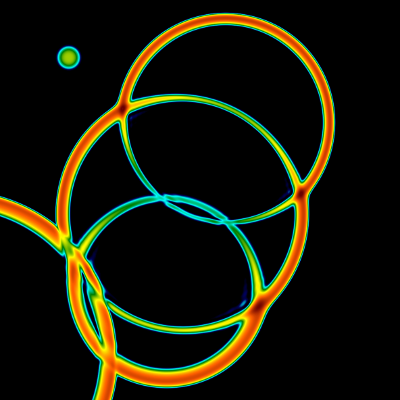
To explain why there's no antimatter, we need to go back to 10 picoseconds after the #BigBang. When the Higgs boson 'turned on', it would have to have done so explosively, like this: vimeo.com/245898934. We wanted to see if this could happen in this model too. 4/10Permalink On twitter.com
Mood +1 🙂
-
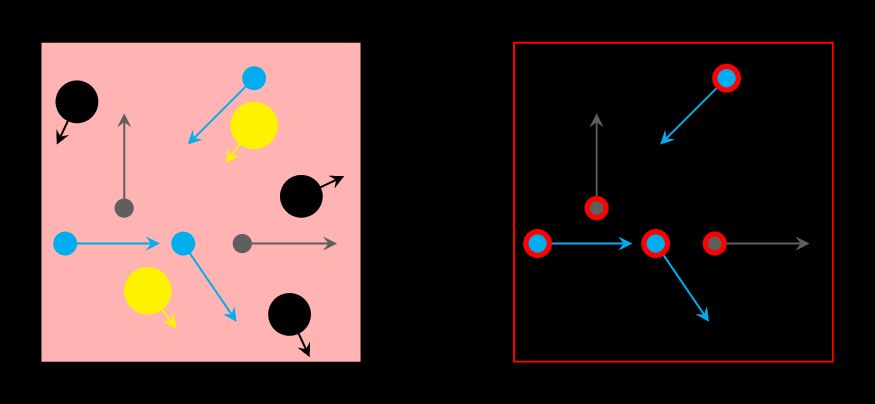
So we took advantage of the fact that the #universe was very, very hot back then (10 picoseconds after the Big Bang) to reduce the Two Higgs Doublet Model to a simpler quantum theory that captures its key features. Heavier particles can be ignored. 5/10Permalink On twitter.com
 Mood +1 🙂
-
This simplification is called "dimensional reduction", and leaves us with a much cleaner theory. Furthermore, if all the new particles beyond our own Higgs boson are relatively heavy, they can also be discarded in this process, leaving us with a very simple theory indeed. 6/10Permalink On twitter.com
Mood +1 🙂
-
That simplified theory is the same one studied in the 1990s (by KRummukainen and others) to show that the Higgs boson *doesn't* turn on explosively in the Standard Model, e.g. in arxiv.org/abs/hep-ph/9605288 and so we can recycle those results! 7/10Permalink On twitter.com
Mood 0
-
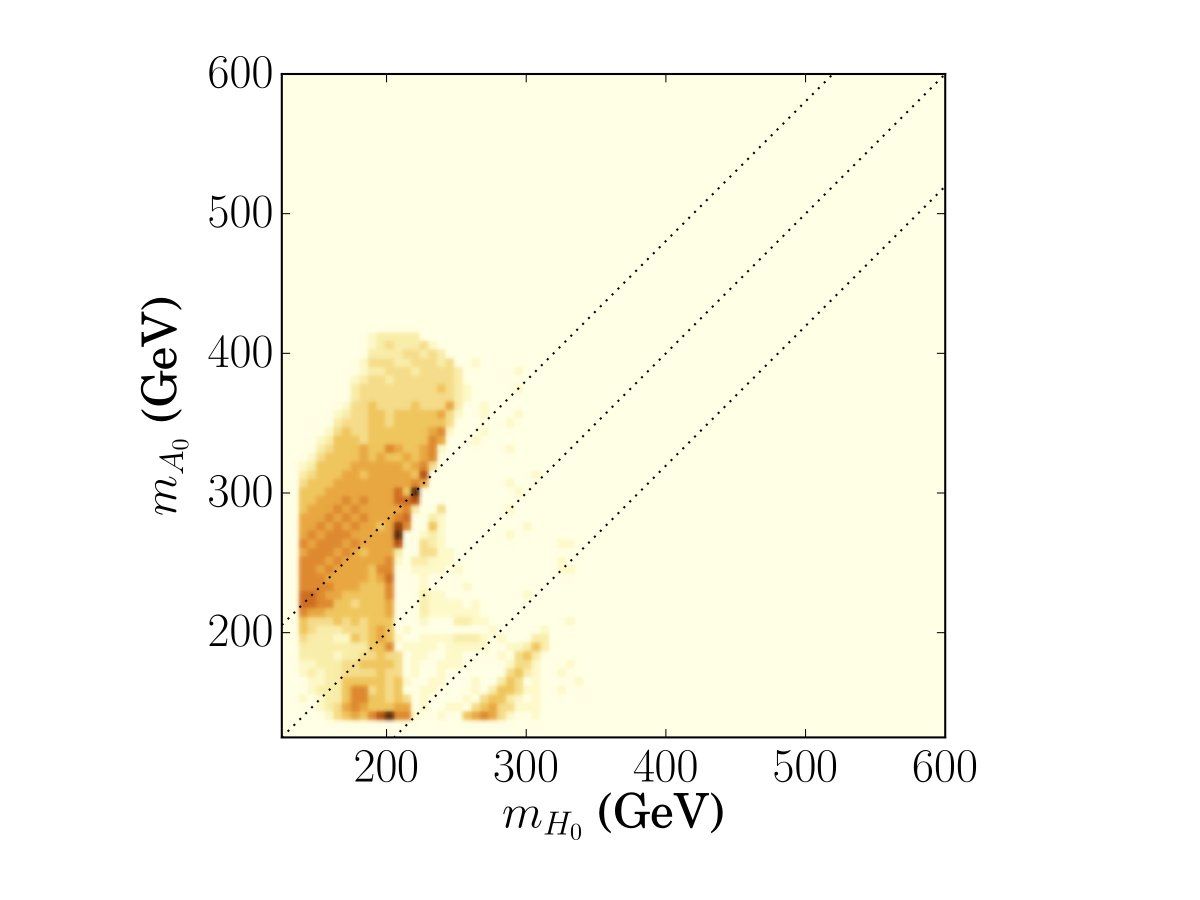
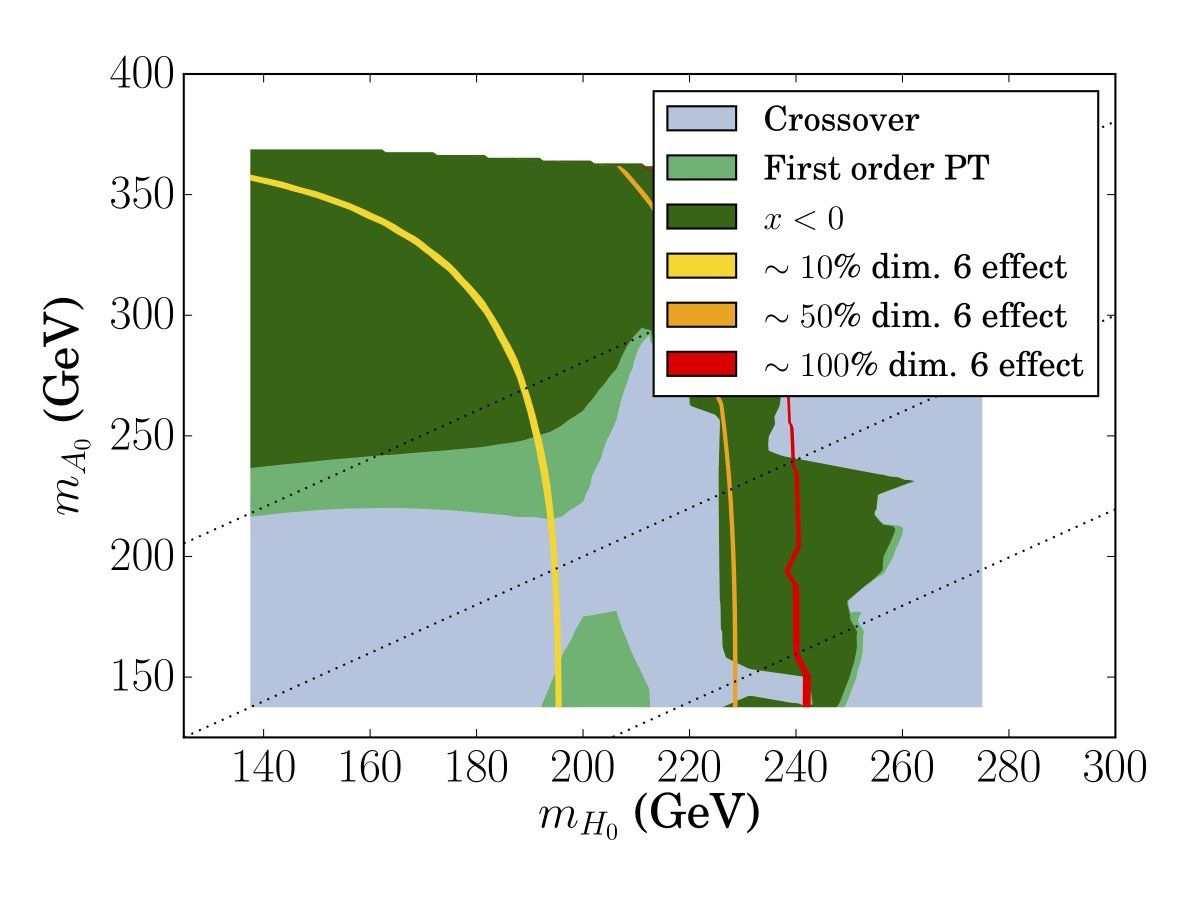
The upshot is we find parameters where this recycling technique works, we can satisfy experimental constraints, and the Higgs boson turned on explosively enough to produce gravitational waves and ... maybe ... explain why there is more matter than antimatter. 8/10On twitter.com
 Mood +1 🙂
-
It also lays the groundwork for exploring situations where the extra particles aren't so heavy. This will need new computer simulations (CSCfi), but for now, we're happy making use of the things that we find. 9/10Permalink On twitter.com
❤️ 1 Favorite
Mood +3 🙂
-
I'd like to thank everyone I worked with on this. The team included people from KumpulaPhysics, UniStavanger, NTNU, @uni_copenhagen and UVaPhysicsDept. I learned a lot from them, from our PhysRevLett referees, and from the other people I discussed this project with. 10/10Permalink On twitter.com
❤️ 1 Favorite
Mood +4 🙂